Some moments make you freeze, especially when something unusual appears during a period and you are left wondering whether it is “just a clot” or something more serious. That is why decidual cast vs clot is such an important topic: the two can look similar at first glance, but they are not the same thing.
A blood clot during a period is often part of heavy menstrual flow. A decidual cast, on the other hand, is uterine lining that sheds in one large piece instead of slowly over several days. It can be painful, startling, and emotionally unsettling, even when it is not dangerous. Cleveland Clinic describes a decidual cast as the endometrial lining passing in one piece and taking the shape of the uterine cavity.
[Image: A simple medical illustration showing uterine lining shedding in one piece beside typical period clotting. Alt text: “Medical illustration comparing a decidual cast and menstrual clot.”]
This article will walk you through what each one looks and feels like, why it happens, when pregnancy needs to be considered, and which symptoms should prompt medical care. The goal is not to make you diagnose yourself from a bathroom moment. It is to help you understand what may be happening and know when to get checked.
decidual cast vs clot: The Plain-English Difference
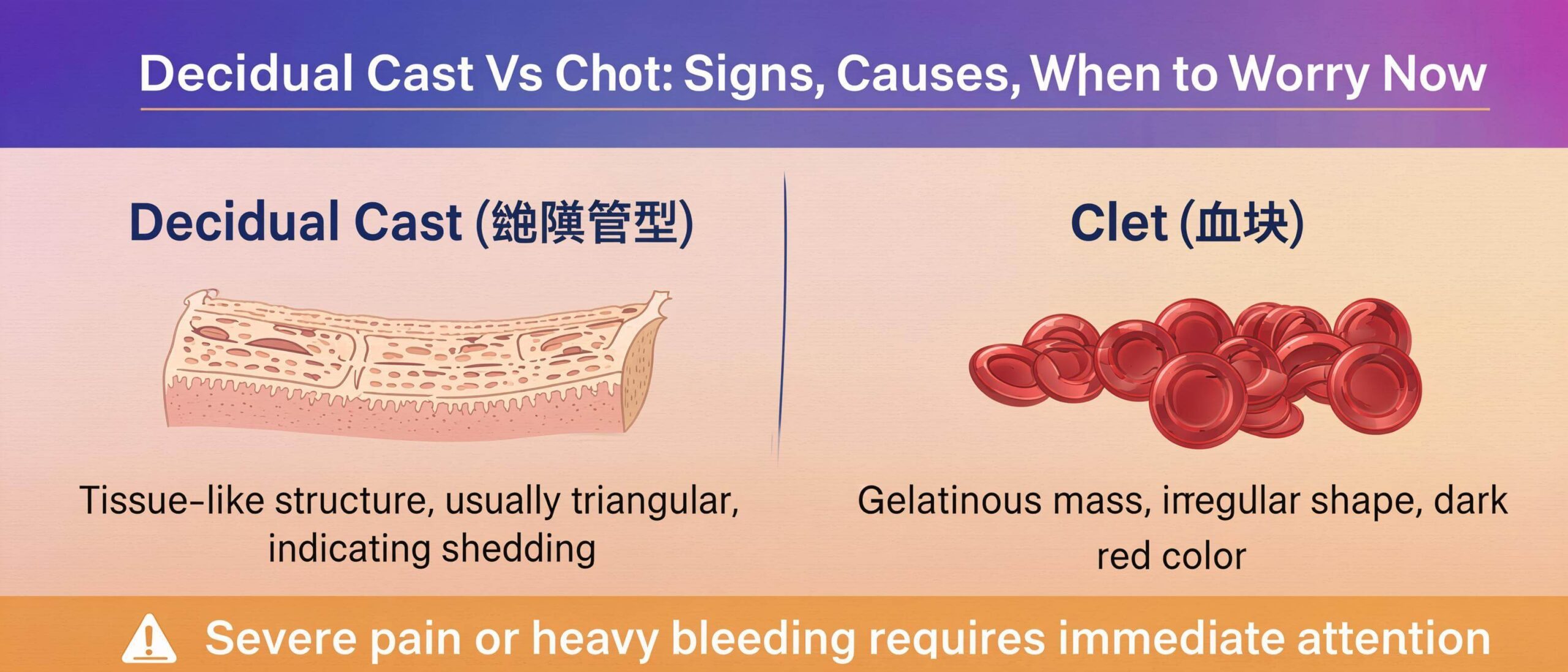
A decidual cast is a piece of endometrial tissue that comes out all at once, sometimes in the general shape of the uterus. It is often described as fleshy, pinkish-red or dark red, and more solid than a normal period clot. Because it passes through the cervix as a larger piece of tissue, it may cause intense cramping or pelvic pain before it appears. Cleveland Clinic notes that symptoms can include severe cramps, pelvic pain, vaginal bleeding or spotting, nausea, dizziness, and feeling faint.
A menstrual clot is different. It is mostly coagulated blood mixed with menstrual fluid and bits of uterine lining. Small clots can happen when flow is heavier and blood pools long enough to thicken before leaving the body. Mayo Clinic says small clots during a period are often not a cause for concern, but larger clots should be discussed with a healthcare professional, especially when bleeding is heavy.
What Is a Decidual Cast?
A decidual cast forms when the lining inside the uterus, called the endometrium, sheds as one piece or mostly one piece. The word “cast” matters because the tissue may resemble the inside shape of the uterine cavity. People sometimes describe it as triangular, pear-shaped, pouch-like, or “like a piece of tissue,” rather than jelly-like blood.
This is one reason decidual cast vs clot searches often happen after a frightening experience. A cast may look too organized or too solid to feel like a normal period clot. It may come with a wave of pain, then relief once the tissue passes. Cleveland Clinic also notes that symptoms often go away once the tissue leaves the vagina.
Infographic: “decidual cast vs clot comparison” with columns for texture, size, shape, pain, pregnancy considerations, and when to call a doctor. Alt text: “Infographic comparing decidual cast versus menstrual clot signs.”
Common Features of a Decidual Cast
A decidual cast may be:
- One larger piece of tissue rather than several small clots
- Fleshy, rubbery, or firm
- Red, dark red, brownish, or pinkish
- Shaped somewhat like the uterine cavity
- Accompanied by sudden, strong cramps
- Followed by a noticeable decrease in pain after it passes
It may also come out in pieces, so the appearance is not always perfect or obvious. That is part of what makes self-identifying it difficult.
Why It Can Hurt So Much
The cervix is the narrow opening between the uterus and vagina. Passing a larger piece of tissue through that opening can trigger stronger cramps than a typical period. The pain can feel sharp, wave-like, or similar to very intense menstrual cramps. For some people, the pain is the most memorable part; for others, the appearance of the tissue is what causes alarm.
Pain level alone cannot confirm what happened. A painful period, miscarriage, ovarian cyst, fibroid-related bleeding, infection, or ectopic pregnancy can also cause significant pelvic pain. If pain is severe, unusual for you, one-sided, accompanied by fainting, or linked with possible pregnancy, it deserves medical attention.
What Is a Menstrual Blood Clot?
A menstrual blood clot is thickened blood that forms during your period. It may look dark red, maroon, brown, or nearly black, especially when blood has taken longer to leave the body. It can feel slippery, jelly-like, stringy, or soft. Clots often appear on heavier days, after sitting or lying down for a while, or during a sudden gush of flow.
The body normally releases substances that help keep menstrual blood from clotting too much. When bleeding is heavier, blood may leave faster than those substances can break it down, so clots appear. That can be normal occasionally, but frequent large clots are worth tracking.
When Period Clots Are More Concerning
A clot becomes more concerning when it is large, recurring, or paired with heavy bleeding. Mayo Clinic advises seeking care for blood clots larger than a grape, especially when they are part of a heavier-than-usual period or when you are soaking through a pad or tampon every hour for many hours.
The CDC describes heavy menstrual bleeding as bleeding that lasts more than seven days, requires changing a tampon or pad after less than two hours, or includes clots the size of a quarter or larger. It also notes that prolonged or heavy bleeding can lead to anemia, which may cause fatigue or weakness.
[Image: A person marking symptoms on a period tracking calendar with a note to record clot size, pain, and flow. Alt text: “Tracking unusual period bleeding and pelvic pain.”]
How to Tell the Difference by Appearance
Appearance can help, but it is not foolproof. A decidual cast tends to look more like tissue. A clot tends to look more like thickened blood. Tissue may hold its shape more firmly, while a clot may break apart more easily. A cast may be larger and may look molded or sheet-like, while clots are often irregular blobs.
Still, bathroom lighting, water, toilet paper, blood, and anxiety can all make things harder to interpret. The safest practical step is to take a photo if you can do so calmly, note the time, and contact a healthcare professional if the bleeding, pain, or pregnancy possibility worries you. If you pass tissue and think you might be pregnant, do not assume it is only a period clot. Read about more about Health.
Quick Visual Clues
Here is a simple way to think about decidual cast vs clot without over-relying on appearance:
- Shape: A cast may look more structured; a clot is usually irregular.
- Texture: A cast may be fleshy or rubbery; a clot is often jelly-like.
- Size: A cast can be larger, sometimes palm-sized; clots vary widely.
- Pain: A cast may cause sudden intense cramps before passing.
- Afterward: Pain may ease after a cast passes, but heavy bleeding may continue with clots.
- Pregnancy context: Passing tissue with a positive or possible pregnancy test needs medical guidance.
Why Decidual Casts Happen
Healthcare providers do not always know exactly why a decidual cast happens. Reported associations include hormonal contraceptives containing progesterone, ectopic pregnancy, pregnancy loss, and sometimes no obvious trigger. Cleveland Clinic notes that decidual casts are rare, with an unknown exact frequency, and may occur in people who are not pregnant, often in connection with progesterone contraceptives.
Some case-report literature describes membranous dysmenorrhea, the medical term connected with passing this type of uterine lining, as rare and associated with oral contraceptives, ectopic pregnancy, abortions, and natural cycles. Case reports are useful for recognizing patterns, but they do not prove that one factor will cause a cast in every person.
Hormonal Contraception and Sudden Lining Changes
Hormonal birth control can affect the thickness and stability of the uterine lining. Pills, injections, implants, emergency contraception, and changes in how consistently hormones are taken may all change bleeding patterns. That does not mean birth control is “bad” or that passing a cast means you must stop contraception immediately.
It does mean context matters. If the event happened soon after starting, stopping, missing, or changing a hormonal method, tell your clinician. They may ask about pregnancy risk, timing, pain, bleeding amount, and whether this has happened before.
Pregnancy, Ectopic Pregnancy, and Miscarriage Confusion
This is the part that deserves extra care. Decidual tissue can be involved in pregnancy-related bleeding, and passing tissue can also happen with miscarriage. ACOG notes that early pregnancy loss can involve bleeding, cramping, nausea, diarrhea, and passing tissue.
An ectopic pregnancy happens when a fertilized egg implants outside the main uterine cavity, most often in a fallopian tube. Mayo Clinic explains that ectopic pregnancy cannot continue normally and can lead to life-threatening bleeding if untreated. Early warning signs may include light vaginal bleeding and pelvic pain; emergency symptoms can include severe abdominal or pelvic pain with bleeding, shoulder pain, extreme lightheadedness, or fainting.
That is why decidual cast vs clot is not only a visual question. Pregnancy status changes the urgency. If there is any chance you could be pregnant, take a pregnancy test and contact a healthcare professional, especially if pain is severe, one-sided, or accompanied by dizziness.
Why Menstrual Clots Happen
Period clots usually happen because flow is heavy enough for blood to pool and coagulate. Occasional small clots can be normal, especially on the heaviest day of a period. They may appear after sleeping, sitting for a long time, exercising, or standing up suddenly.
But clots can also show up with conditions that cause heavy or irregular bleeding. These can include fibroids, adenomyosis, endometriosis, polyps, thyroid problems, bleeding disorders, medication effects, miscarriage, ectopic pregnancy, and perimenopause. MedlinePlus lists abnormal bleeding patterns such as bleeding between periods, after sex, during pregnancy, after menopause, heavier-than-usual bleeding, large clots, or bleeding for more than seven days as reasons to pay attention.
Heavy Flow Is the Bigger Clue
The clot itself is not always the main issue. The bigger question is what is happening with the bleeding pattern overall. Are you soaking through protection quickly? Are clots suddenly larger than usual? Is the period lasting longer than normal? Are you feeling weak, breathless, dizzy, or unusually tired?
Those details help clinicians decide whether you need a pregnancy test, blood count, iron testing, pelvic exam, ultrasound, thyroid testing, or other evaluation. MedlinePlus notes that evaluation for abnormal bleeding may include a pregnancy test, complete blood count, iron level, pelvic ultrasound, Pap or HPV testing, thyroid tests, hysteroscopy, or endometrial biopsy depending on symptoms and risk factors.
Symptoms That Help You Decide What to Do Next
When you are trying to compare decidual cast vs clot, look beyond the object itself. Your body’s overall pattern is usually more important than one visual detail.
Symptoms More Suggestive of a Decidual Cast
A decidual cast may be more likely when you notice:
- A single large piece of tissue
- Tissue that looks fleshy rather than gelatinous
- Severe cramps shortly before it passes
- Pain that improves after the tissue comes out
- Recent hormonal contraception changes
- Spotting or bleeding that is unusual for your cycle
These signs do not prove it was a cast. They simply make the possibility more reasonable.
Symptoms More Suggestive of Menstrual Clots
Menstrual clots may be more likely when you notice:
- Multiple smaller jelly-like clots
- Clots mostly during the heaviest flow days
- No unusual tissue shape
- Cramps similar to your typical period
- Bleeding that follows your normal cycle pattern
- Clots that appear after lying down or sitting
Again, “likely” does not mean guaranteed. If something feels dramatically different from your normal, your concern is valid.
When to Seek Medical Care
Get medical advice promptly if you pass a large piece of tissue, have bleeding that is much heavier than usual, or are unsure whether you could be pregnant. This is especially important if the tissue passage is paired with severe pain, dizziness, fever, shoulder pain, or a positive pregnancy test.
MedlinePlus advises contacting a provider when bleeding soaks a pad or tampon every hour for two to three hours, lasts longer than a week, occurs during possible pregnancy, causes severe pain, increases enough to cause weakness or lightheadedness, or comes with fever or lower abdominal pain.
Go Urgently or Seek Emergency Help If
Seek urgent care or emergency help if you have:
- Severe abdominal or pelvic pain, especially with bleeding
- Fainting, extreme dizziness, weakness, or signs of shock
- Shoulder pain with possible pregnancy
- Heavy bleeding that soaks protection rapidly
- Fever, chills, or foul-smelling discharge
- A positive pregnancy test with pain or bleeding
- Pain on one side of the pelvis that is worsening
These symptoms can point to conditions that need fast evaluation, including ectopic pregnancy, severe blood loss, infection, or complications of pregnancy loss.
What to Bring or Track
If you can, write down:
- First day of your last period
- Date and time the tissue or clot passed
- Size, color, and texture
- Number of pads, tampons, cups, or discs used per hour
- Pain level from 1 to 10
- Pregnancy test results
- Birth control or fertility medications used recently
- Fever, dizziness, shoulder pain, or one-sided pain
You can also take a photo of the tissue or clot. Some clinicians may find it helpful, and it can prevent you from having to describe everything from memory while stressed.
What a Doctor May Do
A clinician will usually start with questions: your age, cycle history, pregnancy possibility, contraception use, bleeding amount, pain location, and whether this has happened before. They may recommend a pregnancy test even if you think pregnancy is unlikely, because it changes what needs to be ruled out.
Depending on your symptoms, care may include a pelvic exam, blood tests, ultrasound, swab tests for infection, or follow-up monitoring. If you brought tissue in a clean container or have a clear photo, the clinician may review it. In some cases, tissue may be sent for pathology, especially if pregnancy loss or another condition is suspected.
Treatment Depends on the Cause
There is no single treatment for every case of decidual cast vs clot because the cause matters. A one-time decidual cast without heavy bleeding, pregnancy, infection, or ongoing pain may not require specific treatment beyond observation and symptom relief. Heavy menstrual bleeding may require medications, iron support, hormonal treatment, treatment for fibroids or polyps, or investigation for a bleeding disorder.
For pain, clinicians may suggest over-the-counter pain relief if safe for you, heat, hydration, and rest. But do not use home care as a substitute for medical evaluation when bleeding is heavy, pregnancy is possible, or symptoms feel severe.
Can You Prevent It From Happening Again?
There is no guaranteed way to prevent a decidual cast. If it appears linked with a specific hormonal medication or a recent change in contraception, your clinician may discuss whether to continue, switch, or monitor. Do not stop prescribed hormones without guidance if they are being used for contraception, heavy bleeding control, endometriosis, or fertility treatment.
For period clots, prevention depends on the cause of heavy bleeding. Tracking your cycle for two or three months can reveal patterns. If clots are frequent, large, or paired with fatigue, shortness of breath, or dizziness, ask about checking iron levels and evaluating heavy menstrual bleeding. The CDC notes that heavy bleeding is common and treatable, and that a healthcare provider can determine whether testing for a bleeding disorder is needed.
Myths That Make the Situation More Confusing
“A decidual cast always means miscarriage.”
Not always. A decidual cast can happen in people who are not pregnant. However, miscarriage and ectopic pregnancy can also involve bleeding and tissue passage, so pregnancy status must be considered.
“Clots are always normal.”
Small occasional clots can be normal, but large or frequent clots can be part of heavy menstrual bleeding or another health issue. If you are passing large clots repeatedly, soaking through protection, or feeling weak, it is worth getting checked.
“If the pain stops, everything is fine.”
Pain improving after tissue passes can happen with a decidual cast, but it does not rule out heavy blood loss, pregnancy-related complications, or infection. Watch what happens next and seek help if bleeding continues heavily or other symptoms develop.
“You can diagnose it perfectly from a photo.”
Photos can help, but they cannot replace a pregnancy test, symptom review, exam, ultrasound, or lab work when those are needed. The safest approach is to combine what you saw with what you felt and what is possible medically.
FAQ
Is a decidual cast the same as a blood clot?
No. A decidual cast is tissue from the uterine lining that sheds in one larger piece, while a blood clot is coagulated menstrual blood mixed with menstrual fluid and small bits of lining. They can look similar, which is why the comparison can be confusing.
How can I tell decidual cast vs clot at home?
You can look at texture, shape, size, pain, and timing, but you cannot always tell with certainty. A cast tends to look more fleshy or structured, while a clot is usually softer and jelly-like. If pregnancy is possible, bleeding is heavy, or pain is severe, get medical advice.
Does passing a decidual cast mean I am pregnant?
Not necessarily. Decidual casts can happen in people who are not pregnant, sometimes in connection with hormonal contraception. However, because passing tissue can also happen with pregnancy loss or ectopic pregnancy, it is wise to take a pregnancy test if pregnancy is possible.
Are period clots normal?
Small clots can be normal during heavier flow. Large clots, frequent clots, clots with very heavy bleeding, or clots that are new for you should be discussed with a healthcare professional.
What size clot should worry me?
Mayo Clinic advises seeking medical care for clots larger than a grape. The CDC also lists clots the size of a quarter or larger as one sign of heavy menstrual bleeding, especially when paired with prolonged or heavy flow.
Should I save the tissue or clot?
If you can do so safely and calmly, you may place it in a clean container or take a clear photo. This can help a clinician understand what happened. If that feels distressing, focus instead on tracking symptoms and seeking care when needed.
Can birth control cause a decidual cast?
Hormonal contraception, especially progesterone-containing methods, has been associated with decidual casts, but they remain rare and not fully understood. If this happens after starting or changing birth control, contact your healthcare provider for personalized guidance.
When should I take a pregnancy test?
Take a test if your period is late, your bleeding is unusual, you had unprotected sex, contraception failed, or there is any realistic chance of pregnancy. A positive test with bleeding, pain, dizziness, or tissue passage should prompt medical contact.
Can a decidual cast come out in pieces?
Yes, it can. Although many descriptions involve one larger piece, it may also come out in fragments. That is one reason appearance alone is not always enough to identify what happened.
Is this a medical emergency?
It can be, depending on symptoms. Heavy bleeding, fainting, severe one-sided pelvic pain, shoulder pain, fever, or a positive pregnancy test with pain or bleeding should be treated urgently.
Conclusion
Unusual bleeding can make anyone feel scared, embarrassed, or unsure of what to do next. The main difference is that a decidual cast is usually a larger piece of uterine lining, while a menstrual clot is thickened blood. But real bodies do not always follow textbook descriptions, and the safest answer often depends on pain level, bleeding amount, pregnancy possibility, and whether symptoms are new for you.
If you are comparing decidual cast vs clot because something unusual just happened, take a breath, note what you saw, track your bleeding, and consider a pregnancy test if there is any chance you could be pregnant. Seek medical care promptly for heavy bleeding, severe pain, dizziness, fever, shoulder pain, or tissue passage with possible pregnancy. Trust your instincts: if it feels different enough to worry you, it is reasonable to ask for help.