Stress can make your body feel like it is running on high alert, but what happens when that “wired and tired” feeling will not go away? If you have been wondering how to check cortisol levels, you are not alone. Cortisol has become one of the most talked-about hormones because it affects energy, sleep, blood pressure, blood sugar, inflammation, and the body’s response to stress.
Cortisol is often called the stress hormone, but that nickname only tells part of the story. Your body needs cortisol to function. Problems usually arise when levels are too high, too low, or out of rhythm with your natural daily cycle.

The challenge is that symptoms linked to cortisol can overlap with many other health issues. Fatigue, weight changes, anxiety, poor sleep, cravings, dizziness, and brain fog may involve cortisol, but they can also be related to thyroid problems, anemia, sleep disorders, blood sugar changes, medication side effects, or everyday stress.
This guide explains the different ways cortisol is tested, what each test can show, how to prepare, what results may mean, and when it is important to speak with a healthcare professional.
What Is Cortisol?
Definition and Main Function
Cortisol is a steroid hormone produced by the adrenal glands, which sit above the kidneys. It is part of the body’s stress-response system and is regulated by communication between the brain and adrenal glands.
Cortisol helps the body:
- Respond to physical and emotional stress
- Maintain blood pressure
- Support blood sugar regulation
- Manage inflammation
- Influence sleep-wake patterns
- Support metabolism
- Help the body respond to illness or injury
A healthy cortisol pattern usually rises in the morning, helping you wake up, and gradually falls throughout the day.
Why Cortisol Levels Change
Cortisol is not supposed to stay the same all day. It naturally follows a rhythm, often called the diurnal cortisol pattern.
Levels may change due to:
- Time of day
- Sleep schedule
- Stress
- Illness
- Exercise
- Medications
- Pregnancy
- Shift work
- Alcohol use
- Certain endocrine disorders
This is why timing matters when testing cortisol.
Why Someone Might Check Cortisol
Symptoms of Possible High Cortisol
High cortisol can happen for different reasons. Sometimes it is related to chronic stress or medication use. In more serious cases, it may be linked to conditions such as Cushing syndrome.
Possible signs of high cortisol may include:
- Unexplained weight gain, especially around the abdomen
- Rounded face
- Easy bruising
- Purple stretch marks
- Muscle weakness
- High blood pressure
- High blood sugar
- Irregular periods
- Acne
- Mood changes
- Poor sleep
- Increased infections
These symptoms do not automatically mean cortisol is high, but they may prompt a clinician to investigate.
Symptoms of Possible Low Cortisol
Low cortisol may occur when the adrenal glands do not produce enough cortisol or when the signaling system that controls cortisol is disrupted. You may aslo read this: Saffron Benefits for Female: Health, Beauty & Wellness.
Possible signs of low cortisol may include:
- Severe fatigue
- Muscle weakness
- Dizziness
- Low blood pressure
- Salt cravings
- Nausea
- Abdominal pain
- Unexplained weight loss
- Darkening of the skin
- Low blood sugar
- Feeling worse during illness or stress
Severe cortisol deficiency can become dangerous and requires medical care.
How to Check Cortisol Levels
The Main Testing Options
There are several ways to measure cortisol. The right test depends on symptoms, medical history, medication use, and what the healthcare provider is trying to evaluate.
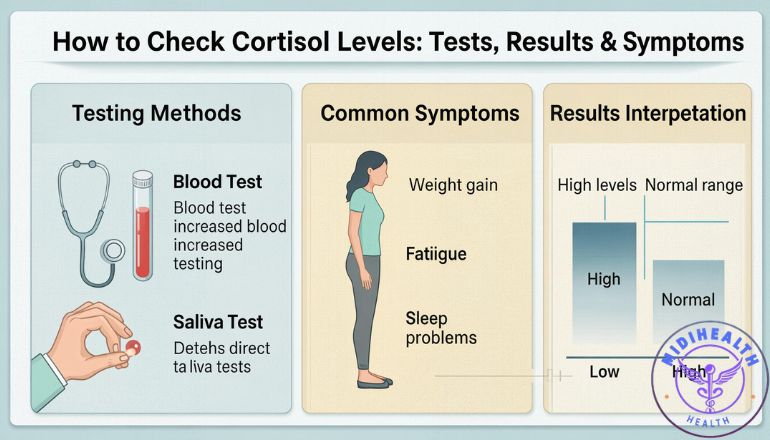
Common cortisol tests include:
- Blood cortisol test
- Saliva cortisol test
- 24-hour urine free cortisol test
- Dexamethasone suppression test
- ACTH stimulation test
Each test answers a slightly different question. That is why how to check cortisol levels is not as simple as choosing one random at-home kit or ordering a single lab test.
Why One Test May Not Be Enough
Because cortisol changes throughout the day, one result does not always tell the full story.
A doctor may order more than one test to understand:
- Morning cortisol production
- Nighttime cortisol levels
- Daily cortisol output
- Whether cortisol suppresses normally
- Whether adrenal glands respond properly
- Whether symptoms match lab findings
Testing should be interpreted in context, not in isolation.
Blood Cortisol Test
What It Measures
A blood cortisol test measures the amount of cortisol in the bloodstream at a specific moment.
It is often collected in the morning because cortisol is typically highest shortly after waking. In some cases, an afternoon blood test may also be ordered for comparison.
When It May Be Used
A blood cortisol test may be used when a clinician is evaluating:
- Possible adrenal insufficiency
- Possible Cushing syndrome
- Pituitary or adrenal concerns
- Unexplained fatigue
- Low blood pressure
- Abnormal sodium or potassium levels
- Symptoms that suggest hormone imbalance
This test is usually done through a standard blood draw.
How to Prepare
Preparation varies depending on the purpose of testing.
A healthcare provider may ask about:
- Steroid medications
- Birth control pills
- Hormone therapy
- Recent illness
- Sleep schedule
- Exercise
- Stress level
- Supplements
Do not stop prescribed medications unless instructed by a clinician.
Saliva Cortisol Test
What It Measures
A saliva cortisol test measures cortisol in spit. It is often used to assess cortisol levels at specific times of day, especially late at night.
Late-night salivary cortisol is commonly used when clinicians are evaluating possible excess cortisol production.
Why Timing Matters
Cortisol should normally be low late at night. If late-night cortisol remains elevated, it may suggest that the body’s normal rhythm is disrupted.
This is one reason saliva testing is often discussed when people ask how to check cortisol levels across the day.

At-Home Collection
Saliva samples are often collected at home using a kit provided by a lab or healthcare provider.
Typical instructions may include:
- Collecting saliva at a specific time
- Avoiding food or drink beforehand
- Avoiding brushing teeth shortly before collection
- Avoiding tobacco or alcohol before testing
- Following storage and mailing instructions carefully
Improper collection can affect results.
24-Hour Urine Free Cortisol Test
What It Measures
A 24-hour urine free cortisol test measures cortisol released into the urine over a full day.
Rather than capturing one moment, this test provides a broader picture of cortisol output across 24 hours.
When It May Be Used
This test may be used when a clinician suspects high cortisol production.
It may help evaluate:
- Possible Cushing syndrome
- Excess cortisol production
- Adrenal or pituitary-related conditions
- Persistent symptoms that suggest cortisol excess
Because collection happens over a full day, accuracy depends heavily on following instructions.
Collection Tips
The process usually involves collecting all urine during a 24-hour period.
General steps may include:
- Emptying the bladder when the collection period begins.
- Collecting all urine afterward for the next 24 hours.
- Keeping the container stored as instructed.
- Returning the sample promptly.
- Reporting any missed collections.
Missing even one urine sample can make the result less reliable.
Dexamethasone Suppression Test
What It Measures
The dexamethasone suppression test checks whether cortisol production decreases after taking dexamethasone, a synthetic steroid medication.
In a healthy response, dexamethasone signals the body to reduce cortisol production. If cortisol does not suppress as expected, further evaluation may be needed.
When It May Be Ordered
This test may be used when a healthcare provider is investigating possible Cushing syndrome or abnormal cortisol regulation.
It is not a casual wellness test. It should be ordered and interpreted by a qualified clinician.
Why Medical Guidance Matters
Dexamethasone testing can be affected by medications, liver function, estrogen therapy, sleep patterns, and other health factors.
Because of this, results should not be interpreted without medical guidance.
ACTH Stimulation Test
What It Measures
The ACTH stimulation test evaluates whether the adrenal glands can produce cortisol when stimulated.
ACTH stands for adrenocorticotropic hormone. It is a hormone that signals the adrenal glands to make cortisol.
When It May Be Used
This test is often used when low cortisol or adrenal insufficiency is suspected.
It may help evaluate whether the adrenal glands respond properly under stimulation.
What to Expect
The test usually involves:
- A baseline blood draw
- An injection of synthetic ACTH
- One or more follow-up blood draws
- Comparison of cortisol levels before and after stimulation
This test is typically performed in a medical setting.
At-Home Cortisol Tests
What At-Home Tests Can Show
At-home cortisol tests usually involve saliva or sometimes dried urine samples. They may provide information about cortisol patterns at different times of day.
People often use them because they are convenient and private.
However, they have limitations.
Limitations of At-Home Testing
At-home tests may be affected by:
- Collection timing errors
- Food or drink contamination
- Oral bleeding
- Poor storage
- Shipping delays
- Medication use
- Sleep disruptions
- Lab quality differences
At-home testing may offer useful information in some situations, but it should not replace medical evaluation when symptoms are significant.
When At-Home Testing Is Not Enough
Do not rely only on an at-home test if you have:
- Severe fatigue
- Fainting
- Unexplained weight loss
- Very high blood pressure
- Severe weakness
- Persistent vomiting
- Symptoms of adrenal crisis
- Signs of Cushing syndrome
- Abnormal blood sugar
- Concerning electrolyte changes
These situations require professional care.
How to Prepare for Cortisol Testing
Discuss Medications First
Medication use is one of the most important details when testing cortisol.
Tell your healthcare provider about:
- Steroid pills
- Steroid creams
- Inhaled steroids
- Steroid injections
- Birth control pills
- Hormone therapy
- Anti-seizure medications
- Some antidepressants
- Supplements
- Recent steroid use for allergies, pain, or inflammation
Steroid medications can strongly influence cortisol testing.
Pay Attention to Timing
Testing time matters because cortisol follows a daily rhythm.
Depending on the test, you may be asked to collect samples:
- Early in the morning
- Late at night
- Several times throughout the day
- Over a full 24-hour period
- Before and after medication exposure
If you work night shifts or have an unusual sleep schedule, tell your provider.
Avoid Common Collection Mistakes
For accurate results, follow instructions carefully.
Common mistakes include:
- Collecting at the wrong time
- Eating before saliva collection
- Missing part of a urine collection
- Exercising intensely before testing
- Forgetting to report medication use
- Not storing samples properly
- Taking supplements without reporting them
Good preparation improves result reliability.
What Cortisol Results May Mean
High Cortisol Results
High cortisol may suggest several possibilities, depending on the test and symptoms.
Potential causes may include:
- Physical stress
- Emotional stress
- Poor sleep
- Depression
- Alcohol use
- Certain medications
- Cushing syndrome
- Adrenal tumors
- Pituitary disorders
- Severe illness
A high result does not always mean a serious disease is present. Follow-up testing is often needed.
Low Cortisol Results
Low cortisol may suggest that the body is not producing enough cortisol.
Potential causes may include:
- Addison’s disease
- Pituitary problems
- Adrenal gland dysfunction
- Long-term steroid medication effects
- Sudden steroid withdrawal
- Certain autoimmune conditions
Low cortisol can become serious, especially during illness or injury.
Borderline or Confusing Results
Cortisol testing can sometimes produce unclear results.
This may happen because of:
- Stress during testing
- Poor sleep the night before
- Medication interference
- Incorrect timing
- Lab variation
- Mild hormone abnormalities
- Cyclical cortisol patterns
A clinician may repeat testing or order a different test.
High Cortisol vs Normal Stress
Everyday Stress Is Not Always a Hormone Disorder
Many people worry that stress automatically means cortisol is dangerously high. In reality, cortisol rises and falls in response to normal life demands.
A tough workweek, poor sleep, intense exercise, or emotional stress may affect cortisol temporarily without indicating an adrenal disorder.
When Stress Becomes a Health Concern
Even when cortisol testing is normal, chronic stress can still affect health.
Long-term stress may contribute to:
- Poor sleep
- Increased cravings
- Muscle tension
- Headaches
- Anxiety
- Digestive issues
- Fatigue
- Blood pressure changes
Lifestyle support can still matter, even when cortisol labs are not abnormal.
How to Check Cortisol Levels With a Doctor
Starting the Conversation
When asking a clinician how to check cortisol levels, it helps to describe your symptoms clearly.
Bring details such as:
- When symptoms began
- Whether symptoms are getting worse
- Sleep patterns
- Weight changes
- Blood pressure readings
- Medication history
- Steroid exposure
- Menstrual changes
- Blood sugar issues
- Family history of endocrine disorders
The more specific you are, the easier it is for a clinician to choose the right test.
What Your Doctor May Ask
A healthcare provider may ask about:
- Fatigue severity
- Dizziness or fainting
- Weight gain or loss
- Muscle weakness
- Skin changes
- Bruising
- Stretch marks
- Mood symptoms
- Period changes
- Blood pressure
- Diabetes or prediabetes
- Current medications
They may also perform a physical exam.
Related Tests That May Be Ordered
ACTH Test
An ACTH blood test measures adrenocorticotropic hormone. It can help show whether cortisol problems may be related to the adrenal glands or the brain’s signaling system.
DHEA-S Test
DHEA-S is another adrenal hormone. It may be checked when evaluating adrenal function, androgen symptoms, or certain adrenal disorders.
Thyroid Testing
Thyroid problems can mimic cortisol-related symptoms.
A clinician may order:
- TSH
- Free T4
- Free T3
- Thyroid antibodies when appropriate
Blood Sugar and Metabolic Tests
Because cortisol affects glucose metabolism, related testing may include:
- Fasting glucose
- Hemoglobin A1c
- Insulin
- Electrolytes
- Kidney function
- Liver function
- Lipid panel
These tests help build a fuller picture.

Cortisol Testing and Women’s Health
Menstrual Cycle and Hormones
Cortisol interacts with many systems, including reproductive hormones. Stress, sleep disruption, and illness can influence menstrual patterns.
Women may ask about cortisol testing when experiencing:
- Irregular periods
- PMS changes
- Perimenopause symptoms
- Sleep disruption
- Weight changes
- Anxiety
- Fatigue
However, estrogen, progesterone, thyroid hormones, iron status, and blood sugar may also need consideration.
Pregnancy and Postpartum
Cortisol changes during pregnancy and postpartum. Testing during these stages should be interpreted by a healthcare professional familiar with pregnancy-related hormone changes.
Do not use general wellness ranges to interpret pregnancy-related results.
Cortisol Testing and Weight Changes
Weight Gain and Cortisol
High cortisol is often discussed in relation to belly fat, but most weight gain is not caused by a rare cortisol disorder.
Weight changes may involve:
- Diet
- Activity level
- Sleep
- Medications
- Insulin resistance
- Thyroid function
- Menopause transition
- Stress eating
- Depression
- Medical conditions
Testing may be appropriate when weight gain appears with other signs of cortisol excess.
Weight Loss and Low Cortisol
Unexplained weight loss with fatigue, dizziness, nausea, low blood pressure, or salt cravings may deserve medical evaluation.
Low cortisol should not be ignored when symptoms are significant.
Lifestyle Habits That Support Healthy Cortisol Rhythm
Sleep Consistency
A regular sleep schedule supports a healthier cortisol rhythm.
Helpful habits include:
- Waking at a consistent time
- Getting morning light
- Limiting late caffeine
- Reducing screens before bed
- Keeping the bedroom cool
- Avoiding heavy late-night meals
Sleep disruption can affect both cortisol and how you feel.
Balanced Nutrition
Blood sugar swings can feel similar to stress symptoms.
Balanced meals may include:
- Protein
- Fiber-rich carbohydrates
- Healthy fats
- Vegetables or fruit
- Adequate fluids
Skipping meals or relying heavily on caffeine may worsen symptoms for some people.
Stress Regulation
Stress reduction does not mean eliminating all stress. It means helping the nervous system recover.
Helpful practices may include:
- Walking
- Breathing exercises
- Yoga
- Journaling
- Therapy
- Time outdoors
- Gentle stretching
- Social connection
- Limiting overtraining
These habits support overall health, even if cortisol testing is normal.
Common Mistakes to Avoid
Testing at the Wrong Time
Because cortisol changes throughout the day, timing errors can make results less useful.
Always follow the exact timing instructions for the specific test.
Ignoring Medication Effects
Steroid medications can greatly affect cortisol results. This includes oral steroids, injections, inhalers, creams, and eye drops.
Always disclose medication use.
Assuming One Result Explains Everything
A single cortisol result rarely explains complex symptoms.
Fatigue, anxiety, weight changes, and sleep problems often have multiple contributing factors.
Using Results Without Medical Context
Lab ranges do not replace medical interpretation. Results must be understood alongside symptoms, timing, medications, and health history.
When to Seek Medical Care Quickly
Possible Adrenal Crisis Symptoms
Very low cortisol can become an emergency in certain situations.
Seek urgent care for symptoms such as:
- Severe weakness
- Confusion
- Fainting
- Severe vomiting
- Severe abdominal pain
- Very low blood pressure
- Dehydration
- Shock-like symptoms
This is especially important for people with known adrenal insufficiency or recent steroid withdrawal.
Concerning High Cortisol Symptoms
Talk with a healthcare provider if you have progressive symptoms such as:
- Rapid unexplained weight gain
- Severe muscle weakness
- Easy bruising
- Purple stretch marks
- New diabetes
- Difficult-to-control high blood pressure
- Bone fractures
- Recurrent infections
These symptoms may require endocrine evaluation.
FAQ
How do you check cortisol levels?
Cortisol can be checked through blood, saliva, or urine testing. Some people may also need specialized tests such as a dexamethasone suppression test or ACTH stimulation test.
What is the best test for cortisol?
The best test depends on symptoms. Morning blood cortisol may help assess low cortisol, while late-night saliva, 24-hour urine, or dexamethasone suppression testing may be used when high cortisol is suspected.
Can I check cortisol levels at home?
Some saliva or urine cortisol tests can be collected at home, but results should be interpreted carefully and should not replace medical evaluation when symptoms are concerning.
What time of day should cortisol be tested?
Cortisol is commonly tested in the morning, but some tests require late-night samples or 24-hour collection. Timing depends on the clinical question.
What are signs of high cortisol?
Possible signs include abdominal weight gain, easy bruising, muscle weakness, high blood pressure, high blood sugar, poor sleep, mood changes, and purple stretch marks.
What are signs of low cortisol?
Possible signs include severe fatigue, dizziness, low blood pressure, nausea, weight loss, salt cravings, weakness, and low blood sugar.
Can stress affect cortisol test results?
Yes. Stress, poor sleep, illness, intense exercise, and medications can influence cortisol results.
Do I need to fast before a cortisol test?
Some tests may require fasting or special instructions, while others may not. Follow the directions from your healthcare provider or lab.
Can medications affect cortisol testing?
Yes. Steroid medications, hormone therapy, birth control pills, and certain other medications may affect results. Always tell your provider what you take.
When should I see a doctor about cortisol?
See a healthcare professional if symptoms are severe, persistent, worsening, or include fainting, unexplained weight changes, severe weakness, high blood pressure, or signs of adrenal crisis.
Conclusion
Understanding how to check cortisol levels starts with knowing that cortisol is not a simple “high or low” hormone. It changes throughout the day, responds to stress, and interacts with sleep, metabolism, blood pressure, inflammation, and many other systems.
Blood, saliva, urine, and specialized stimulation or suppression tests can all provide useful information, but each test has a specific purpose. The right choice depends on symptoms, timing, medications, and medical history.
If you are concerned about cortisol, the most helpful next step is a thoughtful conversation with a healthcare professional. With the right evaluation, testing can move beyond guesswork and help uncover whether cortisol is truly part of the problem—or whether another health issue deserves attention.