Few skincare ingredients have earned as much respect from dermatologists as tretinoin. Yet one question continues to confuse both beginners and long-time skincare users: tretinoin gel vs cream—which formulation is actually better?
At first glance, the difference may seem minor. After all, both products contain the same active ingredient. However, the vehicle that delivers tretinoin to your skin can significantly influence effectiveness, comfort, absorption, and side effects.
Whether you’re treating acne, reducing fine lines, fading dark spots, or improving overall skin texture, choosing the right formulation can make a noticeable difference in your results. Understanding how each option works helps you avoid unnecessary irritation and create a routine that supports long-term skin health.
This comprehensive guide explores the similarities, differences, benefits, drawbacks, and ideal use cases for both formulations so you can make an informed decision.
What Is Tretinoin?
Tretinoin is a prescription-strength retinoid derived from vitamin A. It is widely used to treat acne and improve visible signs of skin aging. You may read this: Retinol vs Hyaluronic Acid: Which One Should You Use Today?
How Tretinoin Works
Tretinoin accelerates cell turnover by encouraging the skin to shed old cells more quickly and generate new ones.
Benefits may include:
- Reduced acne breakouts
- Improved skin texture
- Smoother skin tone
- Less visible fine lines
- Reduced hyperpigmentation
- Increased collagen production
Because it works at the cellular level, tretinoin is considered one of the most extensively studied topical skincare treatments available.
Common Forms of Tretinoin
Tretinoin is available in several formulations, including:
- Gel
- Cream
- Lotion
- Microsphere gel
- Liquid solutions
Among these options, gel and cream remain the most commonly prescribed.
Tretinoin Gel vs Cream: Understanding the Basics
The primary difference between the two formulations lies in the ingredients used to deliver the active medication.
What Is Tretinoin Gel?
Tretinoin gel is typically formulated with alcohol-based or water-based ingredients.
Characteristics often include:
- Lightweight texture
- Faster absorption
- Less moisturizing
- Matte finish
- Quick drying
Many people with oily skin prefer the feel of gel formulations.
What Is Tretinoin Cream?
Tretinoin cream contains moisturizing and emollient ingredients.
Common characteristics include:
- Richer consistency
- Smoother application
- Added hydration
- Slower absorption
- Greater comfort for sensitive skin
Cream formulations are often recommended for individuals prone to dryness.
Key Differences Between Gel and Cream Formulations
Understanding the practical differences can help determine which option aligns with your skin’s needs.
Texture and Feel
One of the most noticeable distinctions is texture.
Gel formulation:
- Lightweight
- Thin consistency
- Dries quickly
- Less residue
Cream formulation:
- Softer texture
- More moisturizing
- Richer feel
- Longer blending time
Absorption Rate
The delivery system affects how quickly the product penetrates the skin.
Gel products typically:
- Absorb faster
- Feel lighter
- Leave minimal residue
Cream products generally:
- Absorb more gradually
- Provide longer-lasting hydration
- Feel more nourishing
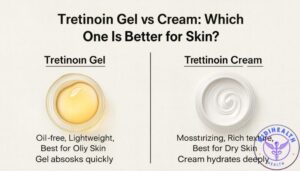
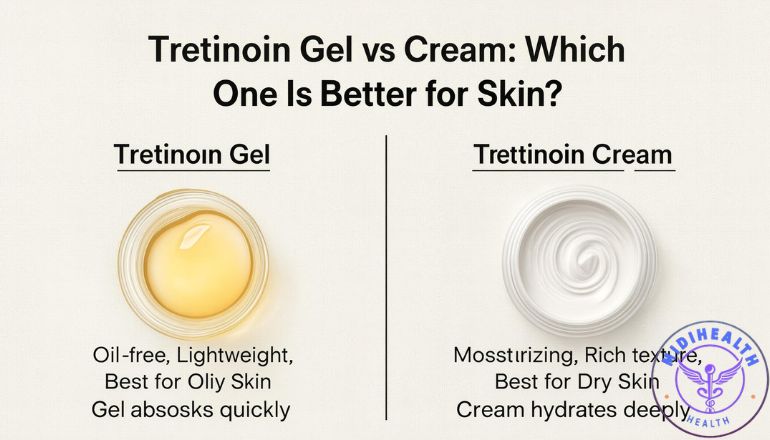
![Infographic comparing tretinoin gel and cream features]
Moisturizing Properties
Hydration is often the deciding factor.
Cream formulations contain moisturizing ingredients that help reduce dryness associated with tretinoin use.
Gel formulations provide little additional moisture and may increase skin dryness in some users.
Tretinoin Gel vs Cream for Acne Treatment
Acne is one of the most common reasons people begin tretinoin therapy.
Why Tretinoin Helps Acne
Tretinoin works by:
- Preventing clogged pores
- Reducing blackheads
- Improving cell turnover
- Limiting acne formation
- Supporting clearer skin
Consistency is crucial because results often take several weeks to become noticeable.
Which Is Better for Acne?
When discussing tretinoin gel vs cream, many dermatologists recommend gel formulations for oily and acne-prone skin.
Reasons include:
- Faster absorption
- Lighter texture
- Less occlusive feel
- Reduced shine
However, individuals with sensitive skin may tolerate cream formulations more comfortably while still achieving acne improvement.
Tretinoin Gel vs Cream for Anti-Aging
Tretinoin is also widely used for age-related skin concerns.
Benefits for Aging Skin
Regular use may help:
- Improve collagen production
- Reduce fine lines
- Smooth rough texture
- Minimize sun damage
- Enhance skin brightness
Because aging skin often becomes drier, formulation choice matters.
Which Formulation Works Best?
For many adults seeking anti-aging benefits, cream formulations are frequently preferred because they provide added hydration alongside treatment.
The moisturizing base can help offset:
- Dryness
- Peeling
- Tightness
- Flaking
This often improves long-term adherence to treatment.
Skin Type Considerations
Choosing the right formulation should start with understanding your skin type.
Oily Skin
People with oily skin often benefit from:
- Lightweight products
- Faster absorption
- Reduced shine
Gel formulations are commonly favored because they feel less heavy throughout the day.
Dry Skin
Dry skin requires additional support.
Cream formulations may be preferable because they:
- Provide moisture
- Improve comfort
- Reduce irritation
- Minimize flaking
Combination Skin
Combination skin may respond well to either option depending on individual concerns.
Some users choose:
- Gel during warmer months
- Cream during colder months
Sensitive Skin
Sensitive skin typically benefits from a gentler introduction to tretinoin.
Cream formulations often provide:
- Better tolerability
- Less stinging
- Reduced irritation
- Greater barrier support
![Person applying tretinoin as part of an evening skincare routine]
Side Effects: Does One Cause More Irritation?
All tretinoin products can cause temporary side effects.
Common Side Effects
These may include:
- Redness
- Dryness
- Flaking
- Peeling
- Burning sensation
- Sensitivity
These reactions are often strongest during the first few weeks.
Gel vs Cream Irritation Potential
In the discussion of tretinoin gel vs cream, gel formulations are generally considered more drying.
This may occur because:
- They contain fewer moisturizing ingredients
- Some formulations include alcohol
- Faster penetration can increase irritation
Cream formulations are usually associated with better comfort during the adjustment period.
Effectiveness: Is One Stronger Than the Other?
Many users assume the gel must be stronger because it feels more intense.
Same Active Ingredient
Both formulations contain tretinoin.
If concentrations are identical, such as:
- 0.025%
- 0.05%
- 0.1%
The active ingredient strength remains the same.
Why Results May Feel Different
Differences often result from:
- Absorption rate
- Skin tolerance
- Product vehicle
- Hydration levels
The formulation that you can use consistently often delivers the best long-term results.
How to Choose the Right Tretinoin Formula
Selecting the ideal formulation depends on several factors.
Choose Gel If You Have
- Oily skin
- Acne-prone skin
- Humid climate conditions
- Preference for lightweight products
- History of clogged pores from creams
Choose Cream If You Have
- Dry skin
- Sensitive skin
- Mature skin
- Existing barrier damage
- Frequent irritation from active ingredients
Ask Your Dermatologist About
- Current skincare routine
- Skin sensitivity
- Treatment goals
- Medical history
- Previous retinoid experience
Professional guidance can help prevent unnecessary side effects.
Tips for Using Tretinoin Successfully
Regardless of formulation, proper use improves results.
Start Slowly
Many dermatologists recommend:
- Applying two to three nights weekly initially
- Increasing gradually
- Monitoring irritation
This approach helps the skin adapt.
Use a Gentle Moisturizer
A supportive moisturizer can help reduce:
- Dryness
- Tightness
- Peeling
- Irritation
Wear Sunscreen Daily
Tretinoin increases sensitivity to sunlight.
Daily sunscreen use helps:
- Prevent sun damage
- Protect treatment results
- Reduce irritation
Be Patient
Results often require:
- 6–12 weeks for acne improvement
- Several months for anti-aging benefits
- Consistent use for best outcomes
Frequently Asked Questions
Is tretinoin gel stronger than tretinoin cream?
Not necessarily. If both products contain the same concentration of tretinoin, the active strength is identical.
Which is better for oily skin?
Many people with oily skin prefer gel formulations because they feel lighter and absorb quickly.
Is cream better for dry skin?
Yes. Cream formulations generally provide more hydration and are often easier for dry skin to tolerate.
Can I switch from gel to cream?
Yes. Many users switch formulations based on changing skin needs or seasonal conditions.
Which causes less peeling?
Cream formulations often cause less visible peeling because they contain moisturizing ingredients.
Can both formulations treat acne?
Yes. Both gel and cream versions are effective acne treatments when used consistently.
Does tretinoin cream clog pores?
Most tretinoin creams are designed to be non-comedogenic, but individual reactions can vary.
Which works faster?
Some people feel gel formulations work faster due to quicker absorption, though long-term results are often similar.
Is one better for wrinkles?
Both can improve wrinkles, but cream formulations are frequently preferred for mature or dry skin.
Should beginners start with cream or gel?
Many beginners tolerate cream formulations more comfortably, especially if they have sensitive or dry skin.
Conclusion
Choosing between tretinoin gel vs cream ultimately comes down to your skin type, treatment goals, and tolerance level. Both formulations contain the same proven active ingredient and can deliver impressive improvements in acne, skin texture, pigmentation, and signs of aging when used consistently.
For oily and acne-prone skin, gel formulations often provide a lightweight experience that feels comfortable throughout the day. For dry, mature, or sensitive skin, cream formulations may offer a smoother introduction with fewer irritation-related challenges. The best option is usually the one that fits your skin’s needs and allows you to maintain long-term consistency. With patience, proper skincare habits, and professional guidance when needed, either formulation can become a valuable part of an effective skincare routine.