
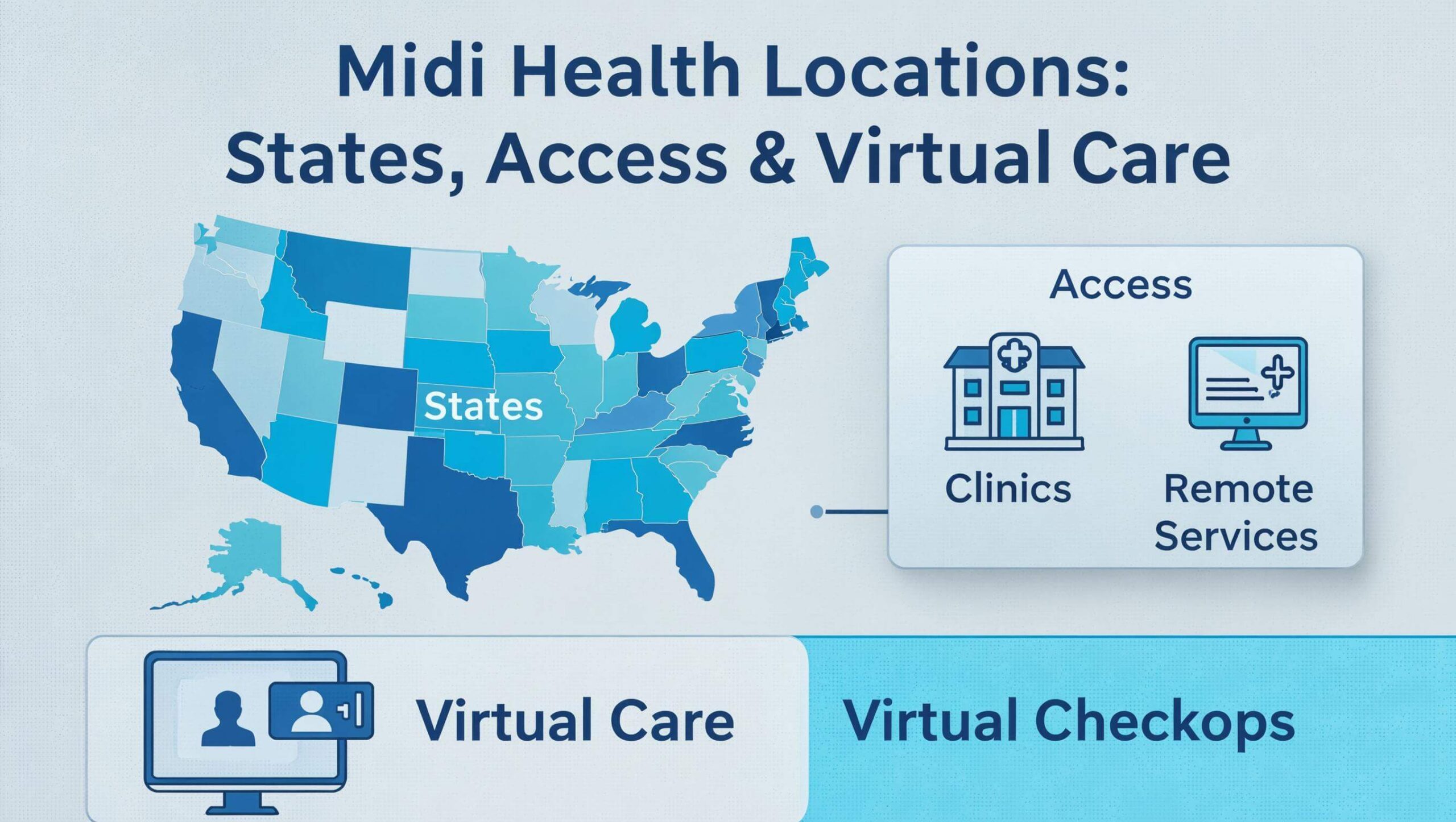
Healthcare should never feel impossible to access, especially during major life transitions like menopause. Yet for many women, finding knowledgeable providers nearby can be surprisingly difficult. That’s one reason searches for midi health locations have grown rapidly as more patients look for specialized virtual menopause care.
Telehealth has completely changed how people connect with medical professionals. Instead of driving across cities, waiting months for appointments, or struggling to find specialists, patients can now access care from home. But when it comes to telemedicine platforms like Midi Health, many people still wonder where services are available and how location-based healthcare licensing works.
Understanding service availability matters because virtual healthcare isn’t automatically accessible everywhere. State laws, provider licensing, insurance networks, and prescription regulations all affect where patients can receive treatment. In this guide, we’ll explore midi health locations, how the platform operates across different states, what patients should know before booking appointments, and why location still matters in online healthcare.

What Is Midi Health?
Midi Health is a telehealth company focused on menopause and midlife women’s healthcare. The platform connects patients with licensed healthcare providers through virtual appointments designed specifically for hormonal wellness and menopause support.
Unlike general telemedicine apps, Midi Health specializes in issues such as:
- Perimenopause
- Menopause
- Hormonal changes
- Hot flashes
- Sleep disruption
- Anxiety and mood shifts
- Weight management
- Sexual wellness
Its specialized focus has helped the platform gain attention among women seeking more personalized hormonal healthcare.
Why Women Are Choosing Virtual Menopause Care
Traditional healthcare systems often leave women feeling frustrated when discussing menopause symptoms. Many patients report:
- Short appointments
- Limited menopause expertise
- Delayed specialist access
- Dismissed symptoms
- Confusing treatment advice
Virtual care platforms aim to improve accessibility and patient experience by offering focused consultations from home.
How Telehealth Changed Healthcare Access
Telemedicine became dramatically more popular over the last several years because it removed many barriers associated with traditional healthcare.
Benefits often include:
- Easier scheduling
- Less travel time
- Faster specialist access
- More appointment flexibility
- Greater privacy
Still, virtual healthcare depends heavily on provider licensing and regional healthcare regulations.
Understanding Midi Health Locations
The term midi health locations can sometimes confuse patients because Midi Health primarily operates as a virtual healthcare platform rather than a traditional network of physical clinics.
Does Midi Health Have Physical Offices?
Most patient care happens online through video consultations. Unlike hospital systems or urgent care chains, Midi Health focuses on telehealth rather than large numbers of walk-in locations.
Patients generally interact with providers through:
- Video appointments
- Digital treatment plans
- Online scheduling
- Electronic prescriptions
- Virtual follow-ups
This creates a healthcare experience designed around convenience and remote access.
Why Location Still Matters in Telehealth
Even fully virtual healthcare companies must follow state licensing laws.
Healthcare providers are typically licensed on a state-by-state basis, which means a doctor legally treating patients in one state may not automatically practice in another.
That’s why service availability can vary depending on where the patient lives.
State Licensing Regulations
Telehealth laws in the United States continue evolving, but providers generally must comply with:
- State medical licensing boards
- Prescription regulations
- Insurance requirements
- Telemedicine laws
This affects where online appointments can legally occur.
Which States Does Midi Health Serve?
Availability changes over time as telehealth companies expand provider networks and obtain additional state licenses. You may also read this: Best Vitamins for Energy: Top Nutrients for Daily Stamina.
Service Expansion Across the United States
Many telehealth companies gradually expand into new states as demand grows. Midi Health has expanded its availability in response to increasing interest in menopause-focused healthcare.
Patients can typically verify availability during the registration process.
Why Some States May Have Limited Access
Several factors influence availability:
- Provider licensing
- Insurance partnerships
- State telehealth regulations
- Prescription rules
- Staffing capacity
This means some patients may experience waiting lists or limited appointment access depending on location.
Rural Healthcare Access
One major advantage of virtual care is improved support for patients in underserved areas.
Women living in rural communities often struggle to find menopause specialists nearby. Virtual healthcare helps bridge that gap.
How Patients Access Care Through Midi Health
Unlike traditional clinics requiring in-person visits, most interactions happen digitally.
Online Registration Process
Patients begin by:
- Creating an online account
- Completing health questionnaires
- Sharing symptom information
- Providing medical history details
This helps providers prepare personalized consultations.
Virtual Appointments
Appointments usually occur through secure video calls where clinicians discuss:
- Symptoms
- Hormonal concerns
- Lifestyle habits
- Treatment goals
- Medical history
Patients often appreciate the convenience and privacy of online visits.
Ongoing Treatment Management
After initial consultations, patients may receive:
- Prescription medications
- Hormone therapy recommendations
- Follow-up scheduling
- Lifestyle guidance
- Preventive health advice
Telehealth platforms increasingly focus on long-term care rather than one-time appointments.

Why Location Matters for Hormone Therapy
One reason people frequently search for midi health locations is because hormone therapy regulations can differ by state.
Prescription Regulations Vary
Some medications require stricter prescribing rules depending on local laws and medical board guidelines.
Healthcare companies must comply with regulations concerning:
- Controlled substances
- Hormonal prescriptions
- Telemedicine evaluations
- Follow-up monitoring
Pharmacy Coordination
Prescriptions are often sent electronically to local pharmacies, which means coordination between telehealth providers and regional pharmacies is important.
Medical Oversight and Safety
Legitimate telehealth companies provide ongoing monitoring for patients receiving hormone-related treatments.
That oversight helps ensure treatment safety and effectiveness over time.
The Rise of Women’s Telehealth Services
Healthcare focused on women’s hormonal health has expanded significantly in recent years.
Growing Demand for Menopause Specialists
Millions of women experience symptoms affecting:
- Sleep
- Energy
- Mood
- Focus
- Relationships
- Daily functioning
Yet menopause education remains surprisingly limited within many traditional healthcare settings.
Telehealth Provides Faster Access
Virtual care platforms help reduce delays associated with:
- Specialist shortages
- Geographic limitations
- Long appointment wait times
This is especially important for women balancing careers, parenting, and caregiving responsibilities.
Increased Awareness Around Midlife Health
Public conversations about menopause are becoming more common across:
- Media
- Social platforms
- Healthcare organizations
- Wellness communities
That visibility has increased interest in specialized telehealth services.
Benefits of Virtual Healthcare Access
Patients searching for midi health locations are often really searching for easier healthcare access overall.
Convenience and Flexibility
Telehealth allows patients to receive care without:
- Driving long distances
- Taking extensive time off work
- Sitting in waiting rooms
Privacy and Comfort
Some patients feel more comfortable discussing sensitive symptoms from home.
Expanded Specialist Access
Women living far from major cities may gain access to providers previously unavailable locally.
Better Appointment Availability
Virtual platforms can sometimes offer more flexible scheduling than traditional clinics.
Challenges of Location-Based Telehealth
Despite many advantages, virtual healthcare still faces limitations.
State-by-State Licensing Complexity
Healthcare licensing laws create logistical challenges for telehealth expansion.
Insurance Variability
Insurance coverage may differ significantly depending on:
- State regulations
- Employer plans
- Provider networks
Technology Barriers
Patients need:
- Internet access
- Video-capable devices
- Basic digital literacy
These factors can affect healthcare accessibility.
How Midi Health Differs From Traditional Clinics
The midi health locations model reflects a broader shift in healthcare delivery.
Traditional Clinics
Conventional healthcare usually relies on:
- Physical offices
- Local provider availability
- Geographic proximity
- In-person scheduling
Virtual-First Healthcare
Telehealth companies instead prioritize:
- Remote accessibility
- Digital communication
- Flexible care models
- Online follow-up systems
This fundamentally changes how patients interact with healthcare providers.
Why Specialized Menopause Care Matters
Menopause affects every woman differently, making personalized care especially important.
Symptoms Can Be Complex
Hormonal changes may influence:
- Sleep quality
- Cognitive focus
- Emotional well-being
- Physical energy
- Bone health
- Cardiovascular health
Women Often Feel Dismissed
Many patients describe years of frustration before finding providers knowledgeable about menopause care.
Focused Providers Can Improve Understanding
Specialized clinicians may better recognize how symptoms overlap and evolve over time.
Patient Experiences With Virtual Menopause Clinics
Many women report positive experiences with menopause-focused telehealth platforms.
Common Benefits Mentioned by Patients
Patients often appreciate:
- Feeling heard
- Longer conversations
- Easier specialist access
- More personalized treatment discussions
Common Challenges
Some users mention concerns like:
- Insurance confusion
- State availability limitations
- Appointment delays
- Prescription costs
These issues are common throughout telemedicine generally.
Future Expansion of Telehealth Healthcare
Virtual healthcare continues growing rapidly across many specialties.
Increased Demand for Remote Care
Patients increasingly expect healthcare to be:
- Flexible
- Accessible
- Digital-friendly
- Personalized
Healthcare Licensing Evolution
Some experts believe future policy changes may simplify interstate telehealth access.
Growth in Women’s Health Innovation
Women’s healthcare remains one of the fastest-growing areas in digital medicine.
FAQ
What are midi health locations?
Midi Health primarily operates through virtual healthcare services rather than traditional physical clinic locations. Patients access care online through telehealth appointments.
Does Midi Health have physical clinics?
Most care is delivered virtually through video consultations, although administrative offices may exist separately from patient care services.
Is Midi Health available in every state?
Availability varies because healthcare providers must comply with state licensing laws and telemedicine regulations.
Why does location matter for telehealth?
Medical licensing and prescription laws differ by state, affecting where providers can legally treat patients.
Can patients receive hormone therapy online?
In many cases, yes. Providers may prescribe hormone therapy when medically appropriate and legally permitted in the patient’s state.
How do patients book appointments?
Patients typically register online, complete medical questionnaires, and schedule virtual consultations through the platform.
Does insurance coverage vary by state?
Yes. Insurance participation and reimbursement often depend on location, provider networks, and individual health plans.
Is virtual menopause care effective?
For many women, virtual care provides accessible support, symptom management, and ongoing treatment guidance.
Why are telehealth menopause services growing?
Demand is increasing because many women struggle to find accessible menopause specialists through traditional healthcare systems.
Conclusion
The growing interest in midi health locations reflects a larger transformation happening across healthcare. Patients no longer want care limited by geography, long waits, or inaccessible specialists. Virtual healthcare platforms like Midi Health are helping reshape how women access menopause support by offering more flexible and specialized care options.
Although telehealth removes many traditional barriers, location still matters because healthcare laws, provider licensing, and insurance systems continue operating on a state-by-state basis. Understanding these factors helps patients navigate virtual healthcare more confidently.
As digital medicine continues evolving, specialized women’s healthcare platforms are likely to expand even further. For many women seeking knowledgeable menopause support, accessible telehealth services may finally provide the convenience, understanding, and personalized care they’ve struggled to find through traditional healthcare systems.